
Protection against fretting + electrical corrosion
- Service life:
- Considering mechanical performance only, a layer of this type generally lasts 2 to 5 times longer than its metallic equivalent; but considering also its electrical-insulation role, its use becomes essential to preserve the life of neighboring components.
- Wear agent:
- A harder surface wears and deforms another of lower performance, while at the same time one assembly must be electrically insulated from the other.
- Attack effect:
- Deformation and loss of geometry. This defect increases mechanical clearances that feed back negatively into the assembly, raising vibration and contact defects, which in turn increase the fretting itself. Preventing electrical conduction eliminates corrosion caused by electric-arc jumps.
- Layer description:
- Geometrically restores the components, making them reusable, while also blocking electrical currents.
- Layer application:
- During the design stage it is determined that a material suited to this function be added during the part's manufacture.
- Material type:
- Ceramic materials
- Typical location:
- Rolling-bearing seats where effective electrical insulation between rotating assemblies is required.
Electrical insulation
- Service life:
- Lets a part or component operate while keeping its mechanical properties and performance in an environment where, without a protective layer, it could not survive.
- Wear agent:
- Electric current
- Attack effect:
- Current transmission in parts where different electrical potentials must be maintained for process reasons.
- Layer description:
- Provides electrical insulation and enables mechanical assemblies where a polymer or other classic insulating element is not mechanically stable or viable.
- Layer application:
- During the design stage it is determined that a material suited to this function be added during the part's manufacture.
- Material type:
- Ceramic materials
- Typical location:
- Mechanical interlock geometries
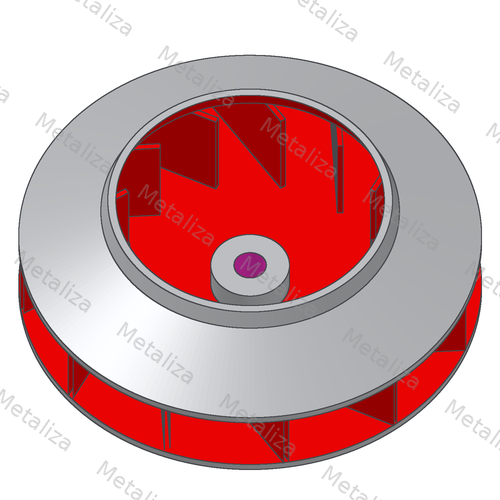
Resistencia a la erosión por partículas
- Service life:
- Reparación de una pieza usada: generalmente el desempeño de una pieza metalizada frente al de una pieza original es desde similar (utilizando un material de recubrimiento muy básico o equivalente al de fabricación de la pieza), hasta multiplicar desde 2 a 10 veces el tiempo de uso, aplicando materiales de alto desempeño de ingeniería. Empleo en fabricación: Cuando se determina el uso de un material en particular en función del comportamiento mecánico - químico, hace que la vida útil del componente solo sea posible si se aplica el recubrimiento.
- Wear agent:
- Las partículas que se desplazan a grandes velocidades en fluidos producen desgaste abrasivo conforme al desplazamiento del fluido en cuestión. Esto puede darse en flujos de líquidos o gases.
- Attack effect:
- Deformaciones aerodinámicas en general y/o cambio de perfil para superficies en fluidos líquidos. Pérdida de pared y consecuente cambios en la resistencia mecánica y/o estructural.
- Layer description:
- Protege a la superficie sometida a partículas duras en suspensión y prolonga su vida útil, o bien, restaura geométricamente.
- Layer application:
- Al producirse erosión por el trabajo, prematuro o normal, pero se desea prolongar la vida del componente sin reemplazarlo. Durante el proceso de diseño, se determina que durante la fabricación del elemento se incluya el aporte de un material más apto para este funcionamiento.
- Material type:
- Aleaciones metálicas con alto cromo. Aleaciones base níquel. Carburos.
- Typical location:
- Zonas expuestas a erosión por partículas en suspensión en fluidos.
Sub-industries & Industries
- Plantas Cementeras - Cement
- Plantas de Procesamiento de Minerales - Mining
- Production plants - Cement
- Planta Química - Chemical Plants